
After years of working on garage doors throughout Hillsboro, I can tell you that weatherstripping is one of the most overlooked maintenance tasks. Every rainy season, we get calls from homeowners dealing with puddles in their garages, and nine times out of ten, the culprit is worn or missing weatherstripping.
The good news is that proper weatherstripping can transform your garage from a damp, drafty space into a dry, energy-efficient area. I’m going to walk you through everything you need to know about weatherstripping your garage door, from identifying problem areas to choosing the right materials for our Pacific Northwest climate.
Table of Contents
What Is Garage Door Weatherstripping and Why Does It Matter?
Weatherstripping is the rubber or vinyl seal that runs along the bottom, sides, and top of your garage door to create a barrier against the elements. It prevents rain, wind, dirt, and pests from entering your garage while also improving energy efficiency.
In Hillsboro’s wet climate, weatherstripping takes a real beating. Between our months of steady rain and occasional freezing temperatures, the materials break down faster than they would in drier regions. When weatherstripping fails, you’ll see water seeping under your door, feel cold drafts, and might even notice an increase in your heating bills if your garage is attached to your home.
I’ve seen garages where moisture intrusion from failed weatherstripping led to rust on vehicles, damaged stored items, and even mold growth on walls. It’s not just about comfort, it’s about protecting your investment.
Where Does Your Garage Door Need Weatherstripping?
There are four key areas where weatherstripping protects your garage. Understanding each location helps you inspect and replace seals more effectively.
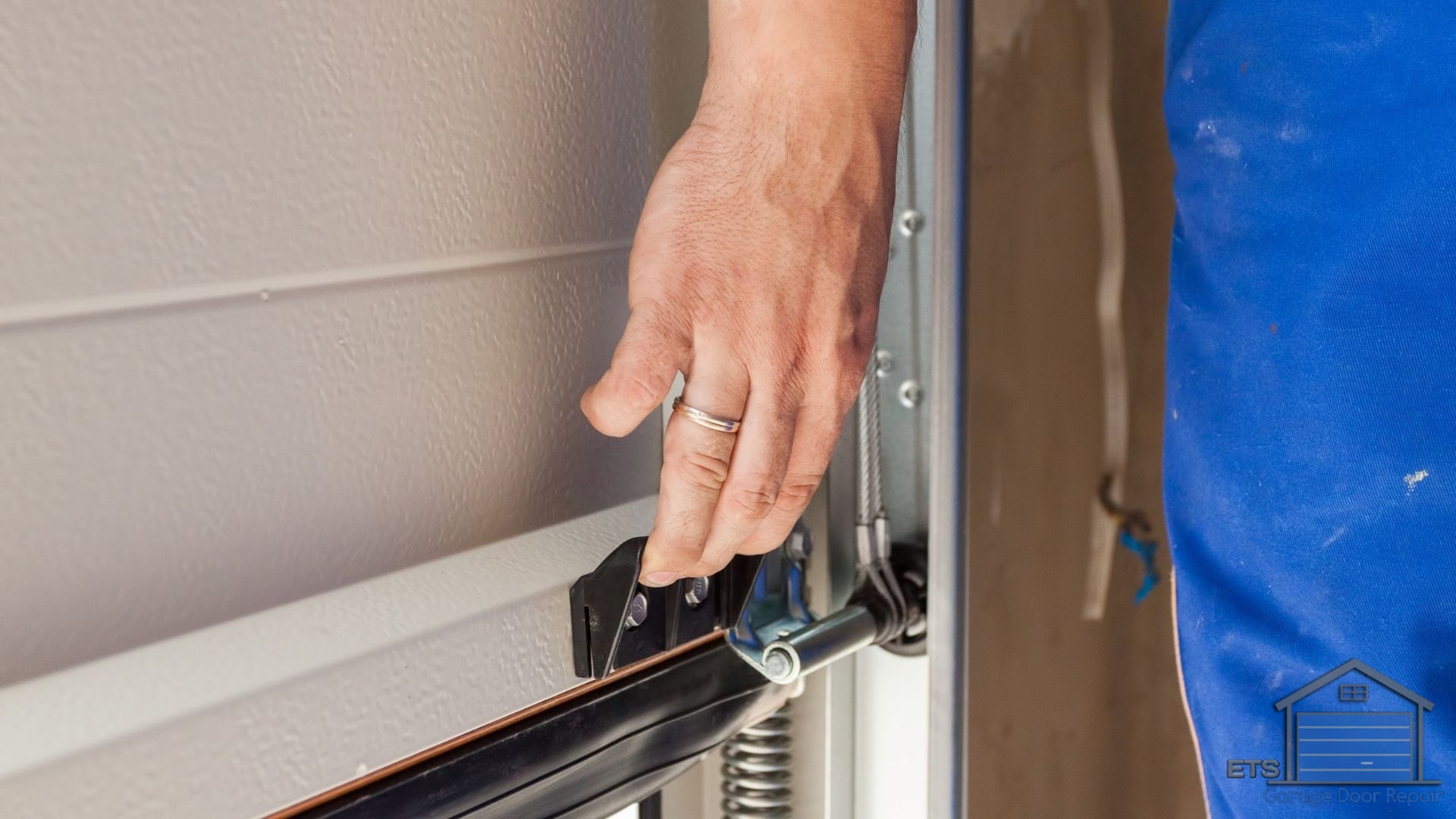
The bottom seal, also called the door sweep or threshold seal, runs along the entire width of your garage door. This is the most critical seal and the one that fails most often in my experience serving Washington County homeowners.
The side seals, sometimes called jamb seals or stop molding, run vertically along both edges of your door. These prevent wind-driven rain from sneaking in around the sides, which is especially important during our winter storms.
The top seal sits between your garage door and the header when the door is closed. While this area sees less wear, it still needs attention to prevent drafts and water entry.
Some garage doors also have seals between individual door panels. These aren’t always necessary, but they add extra protection in harsh weather conditions.
How Do You Know When Your Weatherstripping Needs Replacement?
Your weatherstripping needs replacement when you can see visible cracks, tears, or missing sections, or when light is visible under or around your closed garage door. These are the clearest indicators that your seals have failed.
During my maintenance visits around Orenco and Tanasbourne, I always perform a simple light test. I have the homeowner close the garage door while I stand inside with the lights off. Any daylight streaming in shows exactly where the weatherstripping has failed.
Other signs include water stains on your garage floor near the door, difficulty opening or closing the door due to stiff or swollen seals, or pieces of rubber or vinyl on your garage floor. If your weatherstripping feels hard and brittle instead of flexible, it’s past its prime.
Temperature changes are another telltale sign. If your attached garage feels significantly colder in winter or you notice drafts, your weatherstripping isn’t doing its job. This is also a good time to consider upgrading other aspects of your garage door system, including exploring options through a Door Designer to ensure all components work together for maximum efficiency.
What Types of Weatherstripping Work Best in Oregon?
For bottom seals in our climate, I typically recommend either T-shaped rubber or bulb-style vinyl weatherstripping. Both materials hold up well against constant moisture and temperature fluctuations we experience in Hillsboro.
The T-shaped style slides into a track at the bottom of your garage door and creates an excellent seal on even slightly uneven surfaces. This is my go-to recommendation for most residential applications because it’s durable and easy to replace.
Bulb-style weatherstripping features a rounded bead that compresses when the door closes. It works particularly well on smooth concrete floors and provides excellent water resistance.
For side and top seals, I prefer U-shaped or D-shaped rubber profiles that attach to the door frame. These create a compression seal when the door closes and typically last longer than vinyl alternatives.
Avoid cheap foam or felt weatherstripping for garage doors. While these materials cost less upfront, they absorb moisture and deteriorate quickly in our rainy climate. I’ve seen foam weatherstripping completely disintegrate within a single wet season.
How to Replace Bottom Weatherstripping on Your Garage Door
Replacing bottom weatherstripping is a manageable DIY project for most homeowners. Start by measuring the width of your garage door and purchasing weatherstripping that’s slightly longer than you need.
Open your garage door fully and remove the old weatherstripping by sliding it out of the track. If it’s stuck, a flathead screwdriver can help pry it loose. Clean the track thoroughly with a wire brush and remove any debris or old adhesive.
Slide the new weatherstripping into the track from one end. This can be tricky because the rubber resists going in smoothly. A helpful tip I share with homeowners is to spray a little soapy water in the track, which acts as a lubricant.
Once the weatherstripping is in place, trim any excess with a utility knife. Make sure the seal sits evenly and extends slightly past both edges of the door.
Close your door and check the seal. The weatherstripping should compress slightly against the floor without preventing the door from closing completely.
Installing Side and Top Weatherstripping
Side and top weatherstripping typically attach directly to the door frame using nails or screws. Start by removing the old weatherstripping and cleaning the frame surfaces.
Measure each side and the top separately, as dimensions can vary. Cut your weatherstripping to length, leaving a little extra at the ends for adjustment.
Position the weatherstripping so it will compress slightly when the door closes. The seal should make firm contact without creating so much resistance that it strains your garage door opener.
Secure the weatherstripping every 12 inches with nails or screws, depending on what your frame material allows. Most modern frames have pre-drilled holes that make this process straightforward.
Test the door’s operation after installation. If the door struggles to close or the opener strains, you may need to adjust the weatherstripping position. If you’re considering upgrading to a modern opener that can detect these issues automatically, check out our guide on How To Choose The Right Smart Garage Door Opener For Your Home In 2026.
Should You Add a Threshold Seal to Your Garage Floor?
A threshold seal is a separate weatherproofing product that adheres to your garage floor and creates a ramp-like barrier for your bottom weatherstripping to seal against. It’s particularly effective if your garage floor slopes toward the opening or has uneven surfaces.
I recommend threshold seals for Hillsboro homes that experience water intrusion despite having good bottom weatherstripping. The threshold creates a barrier that water has to flow over rather than under, which makes a huge difference during heavy rain.
Installation involves thoroughly cleaning and drying your garage floor, then adhering the threshold using a special adhesive. The entire process takes about an hour, and the results can be dramatic.
The downside is that threshold seals create a small bump you’ll drive over every time you enter or exit. Most homeowners don’t mind this trade-off for a dry garage, but it’s worth considering if you have a low-clearance vehicle.
Maintaining Your Weatherstripping to Extend Its Life
Proper maintenance can double the lifespan of your weatherstripping. I recommend cleaning your seals quarterly with mild soap and water to remove dirt and debris that cause premature wear.
After cleaning, apply a silicone-based lubricant to rubber weatherstripping. This keeps the material flexible and prevents cracking. Never use petroleum-based products, as these actually break down rubber over time.
During your monthly garage door safety checks, take a moment to visually inspect all weatherstripping. Catching small problems early prevents bigger issues during our heavy winter rains. While you’re performing maintenance, it’s also wise to know How To Safely Unlock And Open Your Garage Door When The Power Goes Out in case of emergencies.
If you have wooden garage door frames, check them periodically for rot or damage near the weatherstripping. Moisture that gets past compromised seals can cause wood deterioration that’s expensive to repair.
Let Our Team Help Protect Your Hillsboro Garage from the Elements
While weatherstripping replacement is often a DIY-friendly project, sometimes the underlying issues require professional attention. If your garage door isn’t sitting level, has damaged panels, or needs track adjustments, new weatherstripping alone won’t solve the problem.
Our team at ETS Garage Door Repair has been serving Hillsboro and Washington County for years, and we’ve weatherproofed hundreds of garages. We can assess your specific situation, identify any structural issues affecting your door’s seal, and ensure your garage stays dry through every rainy season.
If you’re dealing with water intrusion or drafts despite having seemingly good weatherstripping, give us a call. Sometimes the solution is as simple as adjusting your door’s closing force or as involved as leveling your garage floor, and we’ll give you an honest assessment of what’s needed. For professional Hillsboro Garage Door Repair services, don’t wait until the next big storm to discover your weatherstripping has failed.

Leave A Comment